Toddler sleep · 4 min read
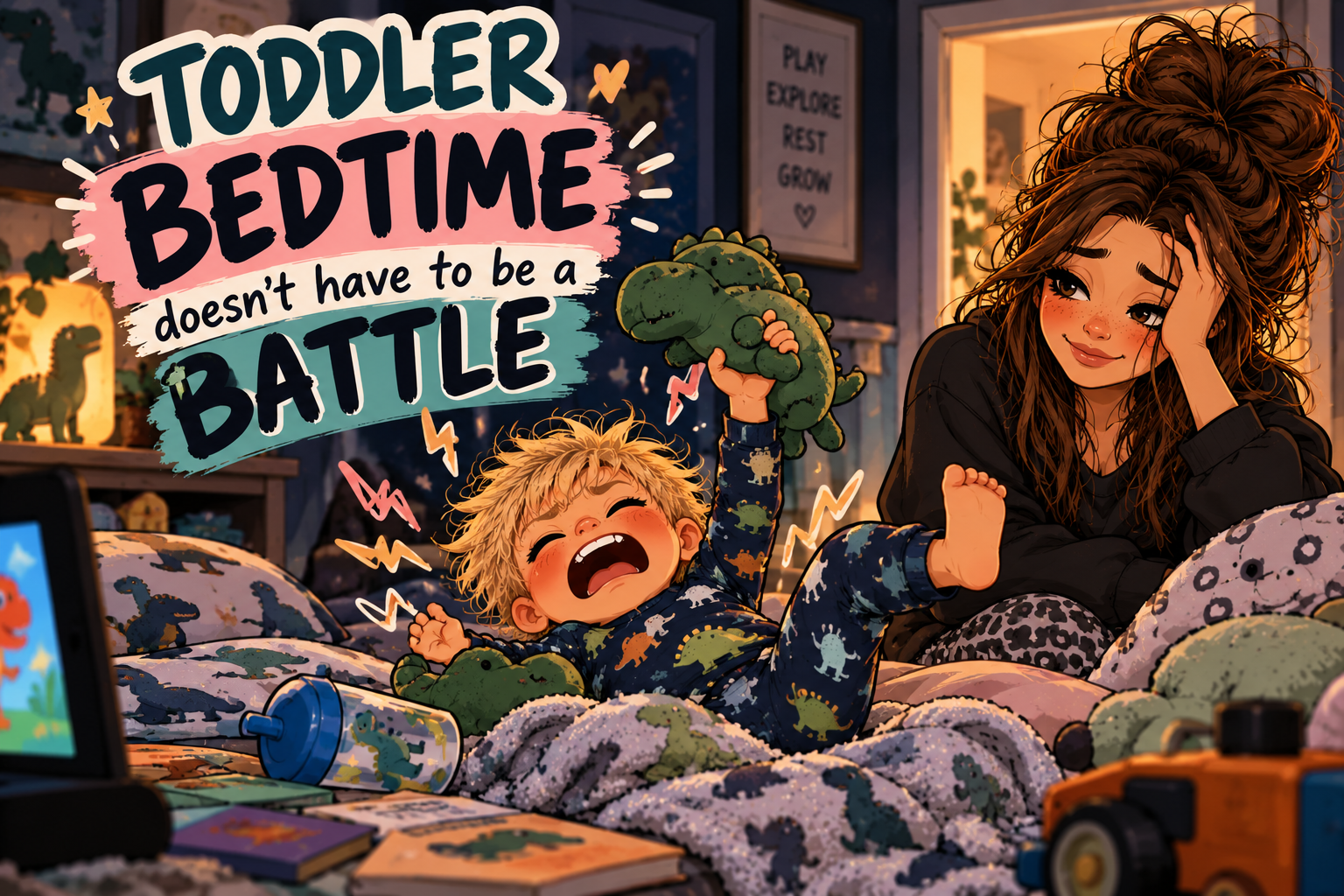
Toddler bedtime doesn’t have to be a battle
By Samantha Oyler · Maternal Menace Family & Coaching
One more drink. One more book. One more hug. If bedtime feels like a negotiation, you’re not failing. Toddlers are learning independence while everyone in the house is running low on energy. Start with a bedtime that feels safer and more predictable—not a contest you have to win.
Look at the whole day first
Bedtime doesn’t happen in isolation. Notice when your child wakes, whether they nap, and how they seem in the evening. A long or late nap may change when they feel sleepy; a missed nap may leave them overwhelmed. Look for patterns over several days rather than deciding from one rough night.
Make the routine small enough to repeat
Choose a few familiar steps: wash up, pajamas, a book, and a goodnight ritual. You don’t need a perfect routine or extra purchases. A simple picture card can help your child see what comes next without hearing the same instructions again and again.
- Offer two choices you’re happy with: which pajamas or which book.
- Include a little connection before the final transition—a conversation, a song, or quiet time together.
- Give a gentle heads-up before changing activities.
- Keep essential needs like toileting, comfort, and thirst in the plan; a new request isn’t automatically manipulation.
Pick a response you can sustain
Some children settle with a parent nearby; others prefer space and a predictable check-in. If your child gets up, guide them back calmly and check what they need. You don’t have to remove comfort to create a boundary. Choose a response that fits your child, your sleep setup, and your capacity.
Try one change tonight
Shorten the routine or make one transition easier. Keep the rest familiar. Notice whether your child seems more comfortable and whether bedtime feels less stressful—not just whether they fall asleep faster. Progress can be uneven, and there’s no deadline for getting it right.
When it’s more than a routine problem
Persistent snoring, breathing pauses, pain, or unusual daytime sleepiness deserve a conversation with your child’s pediatrician. Sleep coaching can help with routines and patterns, but it cannot diagnose or treat a medical condition.
Educational information, not medical advice or a diagnosis. For persistent sleep concerns, speak with your child’s healthcare professional.
Put one idea into practice
A plan that fits your family
Your Sleep Blueprint, a personalized sleep plan, and messaging support while we track and adjust. Message anytime; phone or video calls are scheduled.
Explore sleep coaching Try the free sleep tools